Steam Turbine Overhaul Case Study: AEG Kanis G20 Major Overhaul Completed Within a One Month Outage
A Planned Overhaul That Grew After the Machine Was Opened
Scope, Machine Data and First Findings
When the operator planned the major overhaul of its G20 steam turbine, the objective was clear. The machine had to be opened, inspected and restored for continued reliable operation.
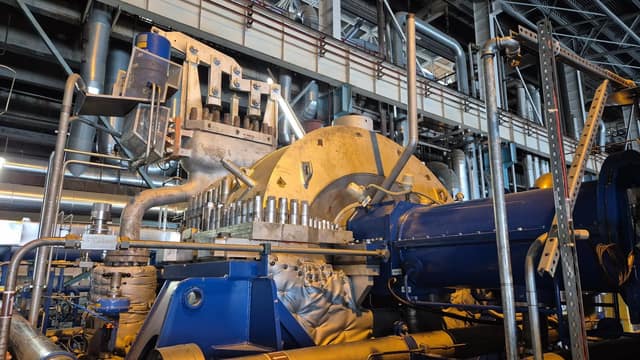
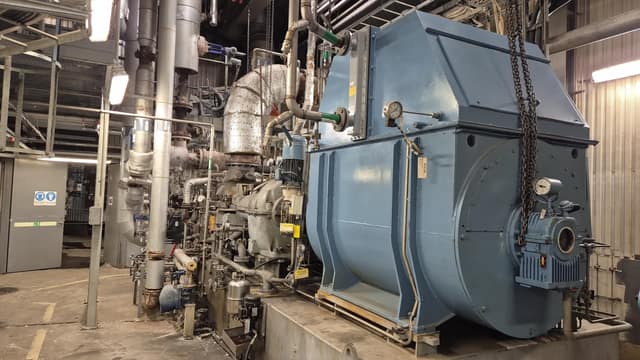
The AEG Kanis G20 unit was commissioned in 1982, produces 2,000 kW and operates at 11,389 rpm. The planned scope covered the complete turbine train: alignment, coupling, turbine casing, stators, rotor, bearings, valves, oil pump, gearbox, reassembly and startup support. The project was therefore designed as more than a standard inspection. It was a complete overhaul package with one partner responsible for coordinating the mechanical condition of the machine.
Once the turbine was dismantled and cleaned, several additional findings became visible:
-
Rust and contamination throughout the steam path
-
Damage and signs of steam leakage at several casing and sealing locations
-
Bent seal strips and running marks on the bearing journals
-
Corroded split line studs and nuts
-
Wear and damage in the valve actuators
-
A broken main oil pump coupling
The important finding was that the turbine remained suitable for refurbishment. No critical defect prevented recovery, but the machine needed a coordinated series of repairs before it could be returned to service.
Despite the extensive additional findings and repair work identified after disassembly, Energetic Machinery completed the full project, including all required extra repairs, within the plant's planned one month outage.
Inspection Before Defining the Repair Scope
Cleaning, Marking Blue and Measurement
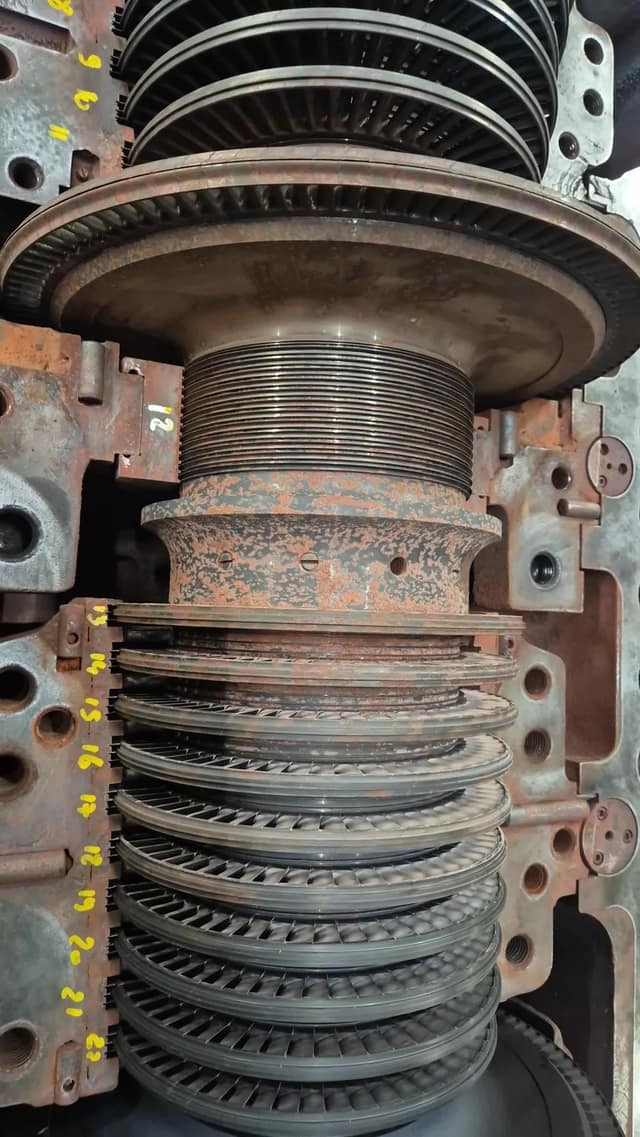
A reliable repair scope starts with clean and measurable components.
The carriers, rotor, stuffing boxes and other steam path parts were cleaned by glass pearl blasting, while the casing split line was cleaned manually. This removed rust and contamination that could hide erosion, contact damage and surface defects.
Energetic Machinery then used several inspection methods to establish the actual condition of the machine:
-
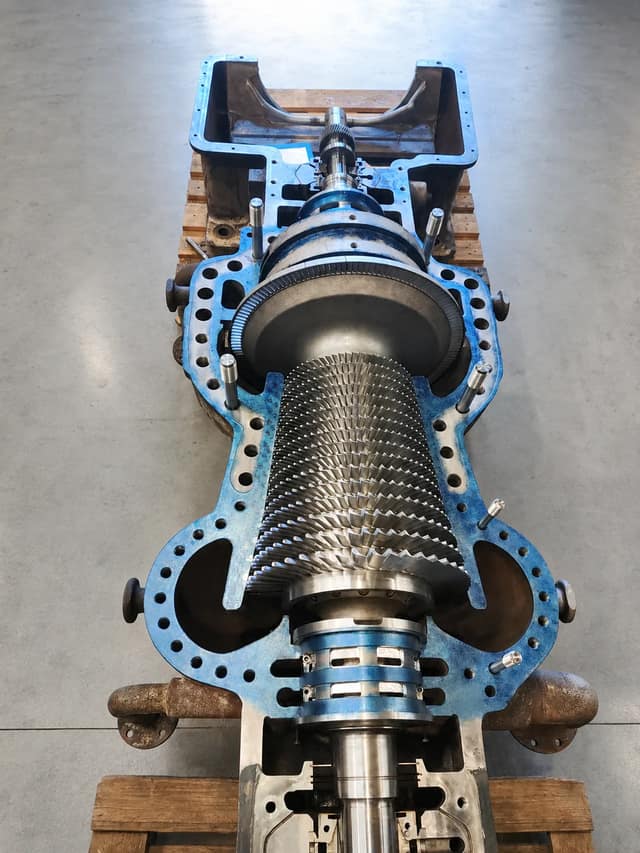
Marking blue on casing, carrier and labyrinth seal split lines to evaluate contact
-
Penetrant testing on the relevant bearing surfaces
-
Mechanical and electrical rotor runout measurement
-
Balance check, critical dimensions, clearances and alignment, all documented
This combination matters because visible wear does not always show whether a component must be replaced. Measurements and inspection allow the team to separate parts that require renewal from parts that can be safely restored and reused.
For the operator, this creates a condition based repair plan. Money and outage time are directed towards the components that need intervention, while serviceable parts are preserved when the inspection supports that decision.
Casing, Carrier and Labyrinth Seal Recovery
Welding, Machining and Sealing Surface Restoration
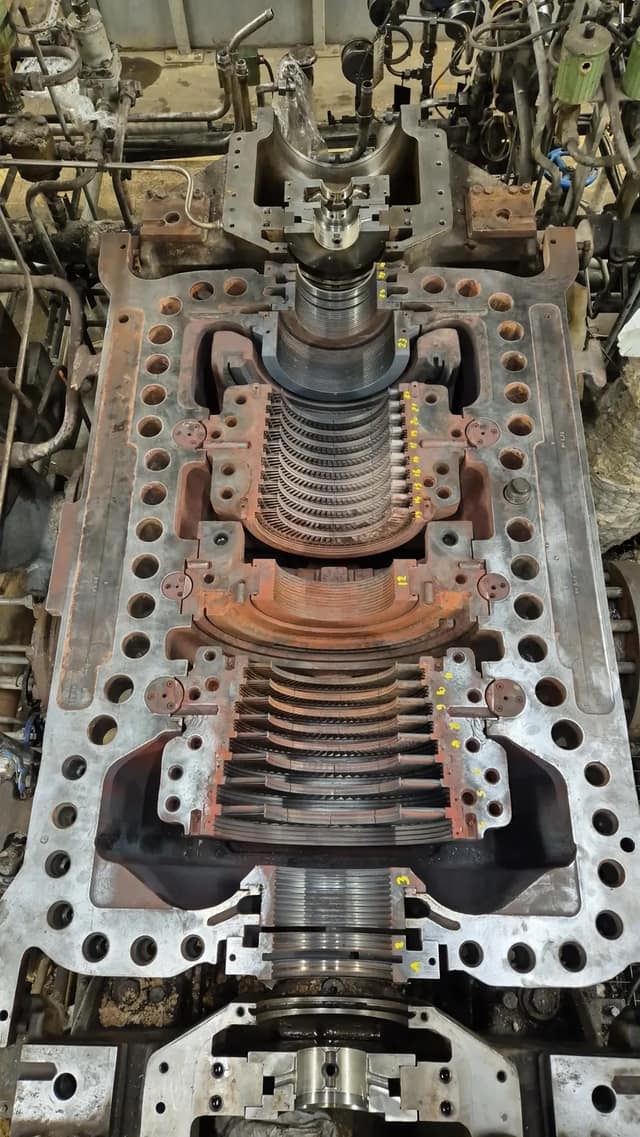
The casing showed damage and evidence of steam leakage at several locations. Marking blue checks confirmed that the split line, carrier interfaces and shaft labyrinth seal split lines required corrective work. Several split line studs and nuts were also corroded or damaged.
The repair included:
-
Welding and machining of damaged areas on the casing, carrier three and the shaft labyrinth seals
-
Cleaning of the stators
-
Polishing of the labyrinth sealing surfaces by machining
-
Renewal of damaged split line fasteners
This is where the Energetic Machinery approach offers a clear advantage. The work did not stop after identifying leakage marks. Welding, precision machining, sealing surface restoration and fastener renewal were handled as connected parts of the same sealing problem.
Using one coordinated team also reduces the risk that separate suppliers work from different references or acceptance criteria. The casing, carriers and seals must function together after assembly, so their repairs must be planned together.
Rotor Refurbishment and Verification
Proving the Condition of the Most Critical Component
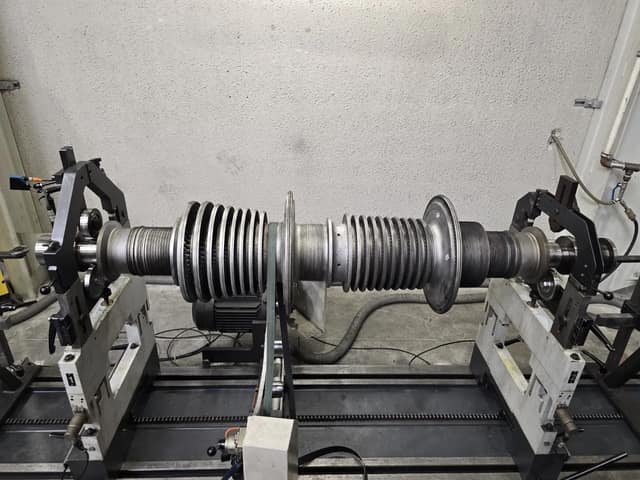
The rotor inspection found several bent seal strips and running marks on the bearing journals. Minor erosion pitting was visible on some blade rows, but the blades were generally in good condition. Mechanical runout was within specification and the balance check showed that residual unbalance remained within tolerance.
The rotor scope included:
-
Glass bead cleaning
-
Mechanical and electrical runout measurement
-
Measurement of critical dimensions and visual inspection
-
Straightening of bent seal strips
-
Polishing of the bearing journals
-
Final runout and balance verification
The commercial value of this process is significant. A rotor is one of the most valuable and lead time sensitive components in a steam turbine. Energetic Machinery did not assume that visible wear meant replacement, and did not assume that the rotor was acceptable simply because it appeared intact.
The rotor was cleaned, measured, corrected and verified. That gave the operator documented confidence in the component while avoiding unnecessary replacement of a serviceable rotor.
Bearings, Balance Piston and Shaft Seals
A Third Option Between Reuse and Replacement
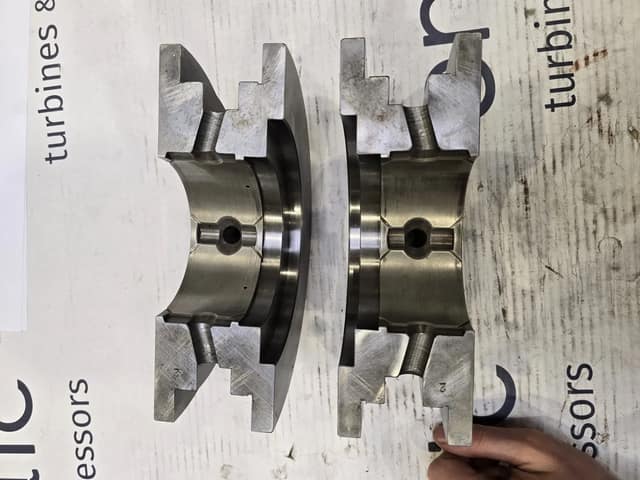
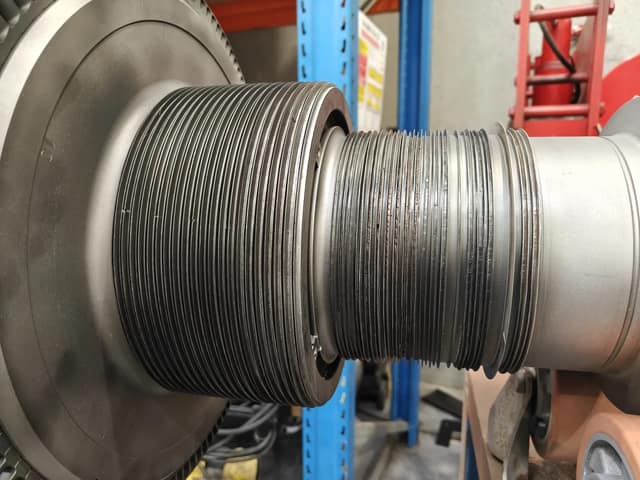
Both radial bearings showed service related wear on their lower halves. The axial bearing pads also showed wear, but penetrant testing found no indications of material defects. The locking ring for the axial tilting pads was slightly bent and prevented the pads from moving as intended.
The reusable bearing surfaces and axial pads were polished, while the damaged locking ring was renewed. This restored the required tilting function without replacing complete bearing assemblies that remained structurally sound.
The balance piston and the shaft labyrinth seals at the drive end and non drive end showed minor contact damage from rotor seal interaction. These surfaces were polished, while damaged split line areas on the shaft labyrinth seals were rebuilt and machined as part of the wider casing repair.
This illustrates another advantage of a coordinated overhaul. The decision is not limited to a simple choice between keeping a component unchanged or buying a new one. Controlled polishing, local rebuilding, machining and selective replacement create a third option, restoring the required function while keeping the scope proportionate to the measured condition.
Stop, Regulation and Extraction Valve Refurbishment
Machining the Sealing Faces
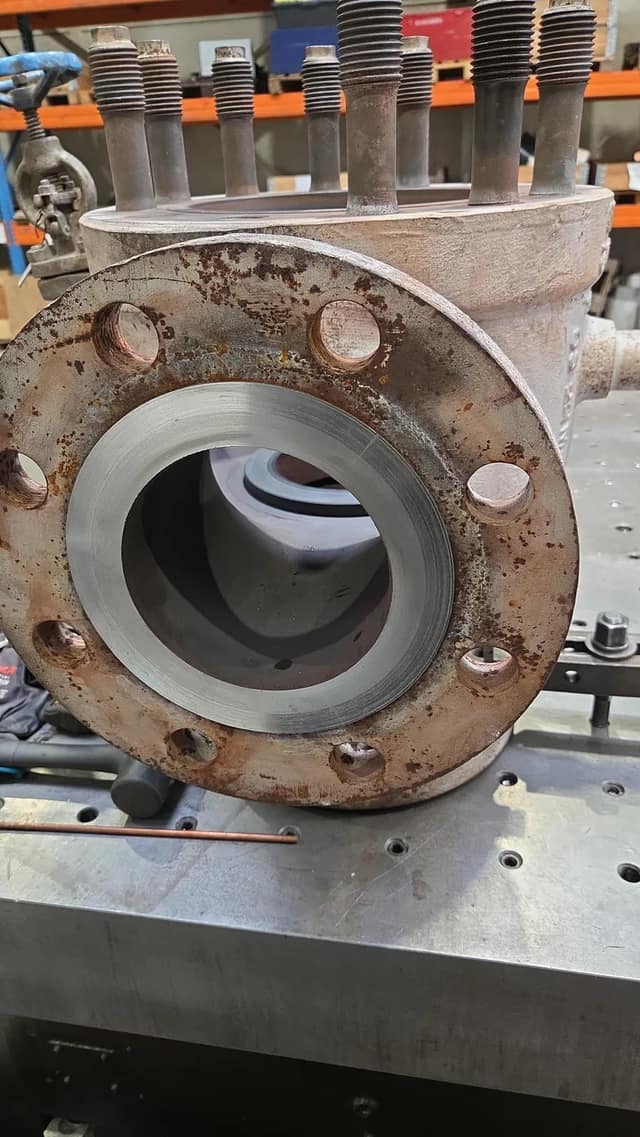
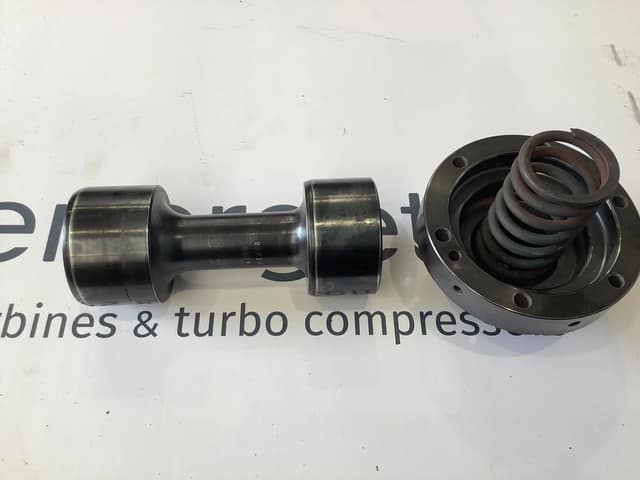
The stop valve seats and valve stamp were in good condition, and the marking blue check showed good contact. The flange surface, however, was in poor condition and required machining back to a clean, flat surface.
Manufacturing the Actuator Components
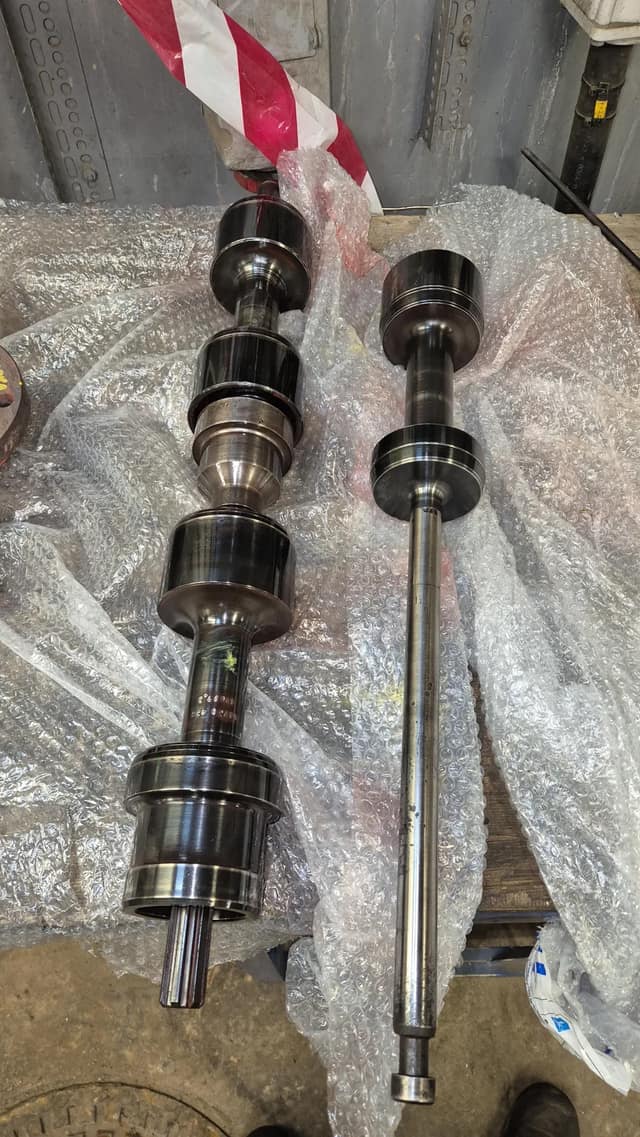
The regulation valve inspection found minor scratches and contamination on one spindle, while the other inspected spindles and valve seats showed no damage. The steam side spindle seals required renewal. The regulation valve actuator had more substantial damage, including a worn piston, a damaged spindle bushing and a damaged flange surface. Energetic Machinery renewed the steam side seals, manufactured a new hydraulic piston and spindle bushing, and machined the damaged flange surface.
The extraction valve showed a similar pattern. One spindle had minor scratches and contamination, while the remaining spindles and valve seats showed no damage. The steam side spindle seals required renewal. Inside the actuator, a damaged O ring and corrosion were found. The actuator piston and spindle bushing had running marks, but they could be reused after cleaning and polishing. A new carbon sealing ring was manufactured.
This combination of inspection, machining and component manufacturing is particularly valuable on older turbines. The outage does not have to stop because a non standard actuator component is unavailable from stock. Energetic Machinery can measure the original part, manufacture the required replacement and integrate it into the same repair and verification process.
Main Oil Pump and Auxiliary Systems
Why the Lubrication System Belongs in the Scope
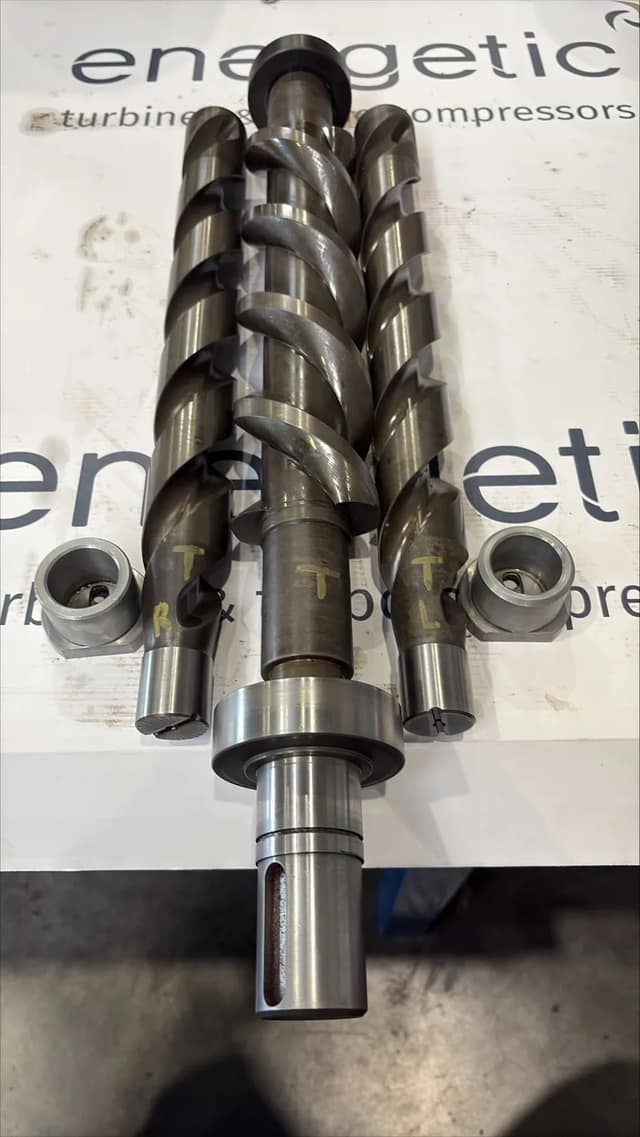
The main oil pump inspection found a broken coupling to the bull gear. The ball bearing, gaskets and O rings required renewal, while the pump spindles and bearing bushes showed no damage. The pump parts were cleaned and polished, and the coupling, ball bearing and sealing elements were renewed.
This repair was important for the reliability of the complete turbine system. A major overhaul cannot focus only on the steam path and rotor. Auxiliary equipment must also be inspected, because a small mechanical failure in the lubrication system can prevent an otherwise healthy turbine from operating safely.
A scope that covers the turbine, valves, bearings, oil pump, gearbox and alignment gives the operator one technical overview of the complete train rather than a collection of isolated component reports.
Alignment, Reassembly and Return to Service
Rebuilding Around the Same References
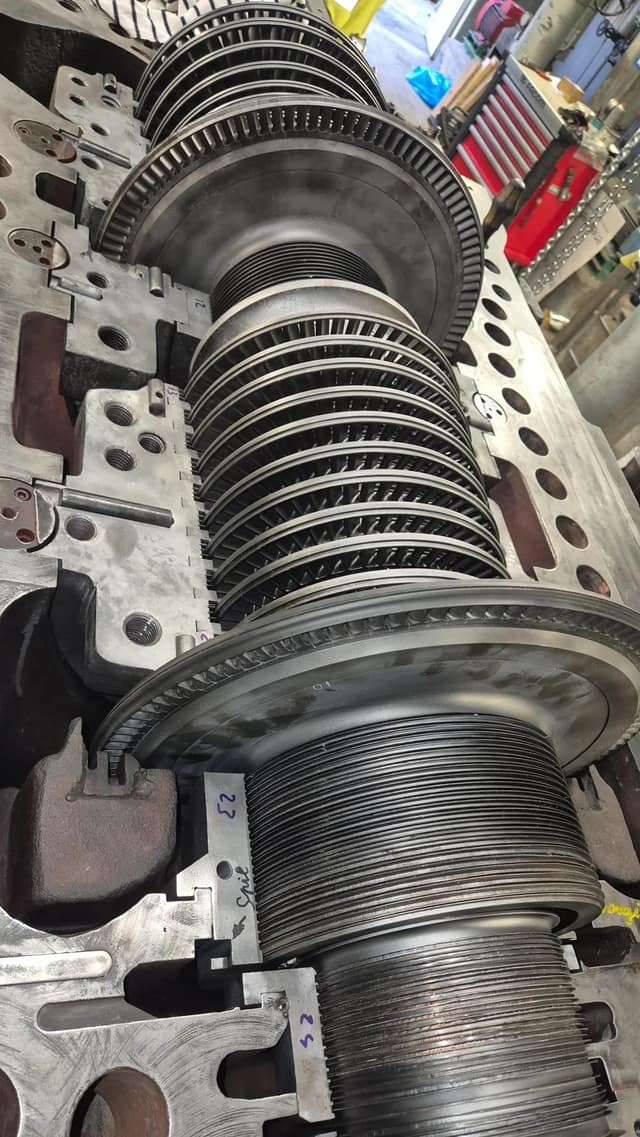
After the component repairs, the machine had to be rebuilt around the same mechanical references used during inspection.
The wider overhaul scope included:
-
Alignment checks across turbine, gearbox and generator
-
Controlled reassembly and mechanical free rotation
-
Verification of oil system function and pressure
-
Cold checkout, startup assistance and vibration analysis
-
Measurement sheets, inspection photographs, non destructive testing results, alignment records and a final report
This final stage is essential. High quality workshop repairs can still be compromised if assembly, alignment and system checks are treated as separate activities. Energetic Machinery keeps the complete process connected, from the first measurement to the final operating checks.
Results: Full Recovery Within the Planned Outage
What the Operator Received
The final inspection report records that the recommended repairs were completed, that the turbine was returned to good condition and that it was returned to service.
-
The full scope, including all extra repairs found after disassembly, was completed inside the planned one month outage.
-
The rotor, the radial and axial bearing surfaces, the balance piston and the extraction valve actuator piston and bushing were restored rather than replaced, keeping the repair proportionate to the measured condition.
-
Three components were manufactured in house during the outage: a hydraulic piston and spindle bushing for the regulation valve actuator, and a carbon sealing ring for the extraction valve.
-
Casing, carriers and labyrinth seals were repaired against one common set of references, so the sealing function was restored as a system.
-
The machine was handed back with measurement sheets, non destructive testing results, alignment records, photographs and a final report.
One Complete Overhaul Product
Why a Single Accountable Partner Matters
For the operator, the Energetic Machinery product was not a list of separate workshop jobs. It was one complete route from planned outage to inspected condition, defined repairs, manufactured components, controlled assembly and return to service.
That structure gives several practical advantages.
First, decisions can be made quickly because field service, engineering, workshop repair, machining and manufacturing are connected. The team that identifies a defect can immediately develop the repair method and arrange the necessary resources.
Second, the repair scope remains transparent. Findings, decisions and actions are documented throughout the work, with digital reporting and direct communication available to the customer.
Third, workshop capacity is linked to the active overhaul. Ongoing revisions and inspections receive workshop priority, which prevents waiting time when unexpected repairs appear after disassembly.
Finally, the customer has one accountable technical partner for the complete mechanical result. This is especially valuable on older steam turbines, where the correct solution may combine repair, reuse, precision machining and newly manufactured components rather than simply ordering original replacement parts.
FAQ – Steam Turbine Major Overhaul
How long does a major steam turbine overhaul take?
It depends on the machine and on what the disassembly reveals. In this project the complete scope, including the repairs identified only after the turbine was opened, was carried out within the plant's planned one month outage.
What usually appears after a turbine is opened that was not in the original scope?
Typical additional findings are rust and contamination in the steam path, poor split line contact, steam leakage marks, bent seal strips, running marks on bearing journals, corroded split line fasteners and wear in valve actuators. On this machine all of these were present, together with a broken main oil pump coupling.
Does a worn rotor always have to be replaced?
Not necessarily. Cleaning, runout and balance measurement, dimensional checks and visual inspection show whether wear is cosmetic or functional. On this turbine the seal strips were straightened and the bearing journals polished, after which runout and balance were confirmed acceptable, so the rotor was reused.
What happens when a spare part for an older turbine is no longer available?
The part can be measured and manufactured. In this overhaul a hydraulic piston, a spindle bushing and a carbon sealing ring were made in house, which kept the outage on schedule.
Which documentation should an operator expect after an overhaul?
Measurement sheets, inspection photographs, non destructive testing results, alignment records and a final report describing findings, repairs and the condition at handover.
Conclusion: Additional Findings Do Not Have to Become Delays
This type of overhaul may be relevant when a turbine shows steam leakage, rust or contamination in the steam path, poor split line contact, damaged labyrinth seals, bent seal strips, bearing wear, unstable valve behaviour or recurring issues in the oil system. It is also relevant when an ageing turbine remains fundamentally sound, but needs a partner capable of proving its condition and correcting several connected problems during one outage.
The main lesson from this project is clear. Opening the machine may reveal more than the original scope anticipated, but additional findings do not have to become uncontrolled delays.
Energetic Machinery combines structured inspection, field service, workshop expertise, precision machining, repair engineering and component manufacturing in one major overhaul solution. This allows each decision to be based on the actual condition of the turbine and gives the operator a clear route back to service.