Steam Turbine Vibration Problems in Industrial Operations
Energetic Machinery was engaged to perform advanced steam turbine troubleshooting on a Siemens SST-300 industrial steam turbine installed in a pulp mill. The unit experienced severe vibration issues at higher loads, forcing the operator to limit power output to avoid trips and unplanned shutdowns. Previous attempts by other service providers failed to identify the root cause. This case highlights the importance of expert steam turbine maintenance, turbine inspection, and engineering-driven diagnostics in restoring performance and reliability.
Advanced Turbine Diagnostics & Vibration Analysis
Identifying the Source of Turbine Instability
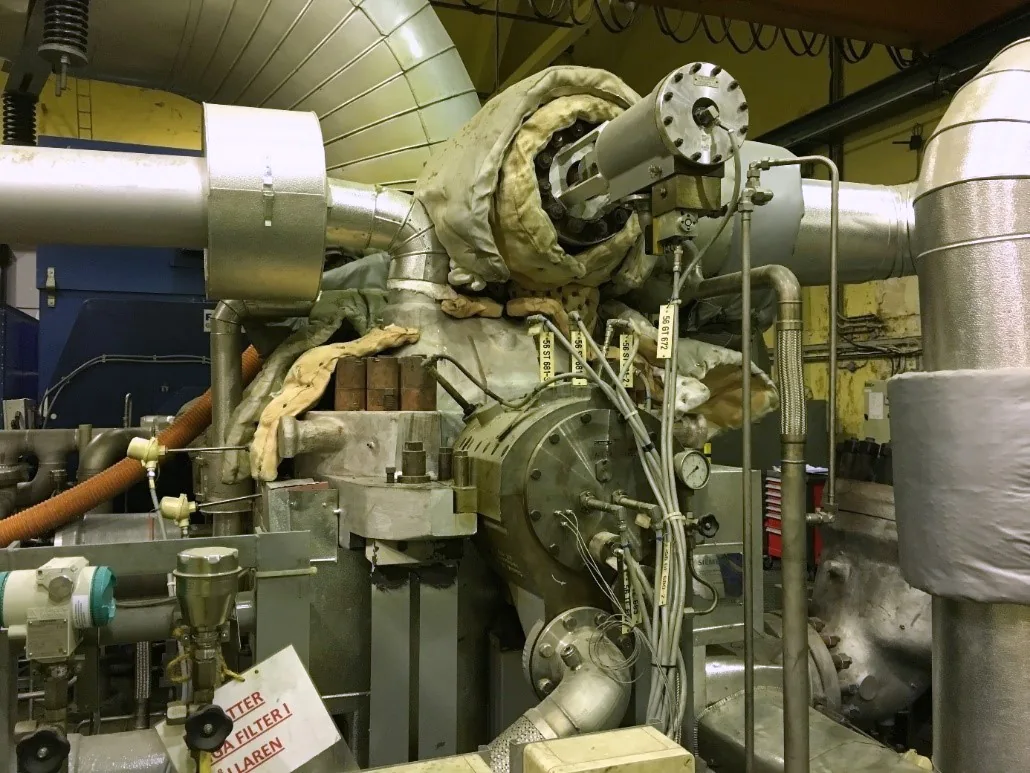
Energetic Machinery performed a comprehensive turbine inspection combined with advanced vibration analysis. Measurements were conducted across multiple load conditions, and spectral data was analysed to identify abnormal behavior. Through detailed evaluation of trend data, operational patterns, and machine behavior, the team identified a clear correlation between load increase and vibration levels. This approach is essential in diagnosing issues in high-speed rotating equipment, where small instabilities can escalate into major failures. The analysis ultimately pointed to a specific component in the low-pressure section of the turbine as the source of instability.
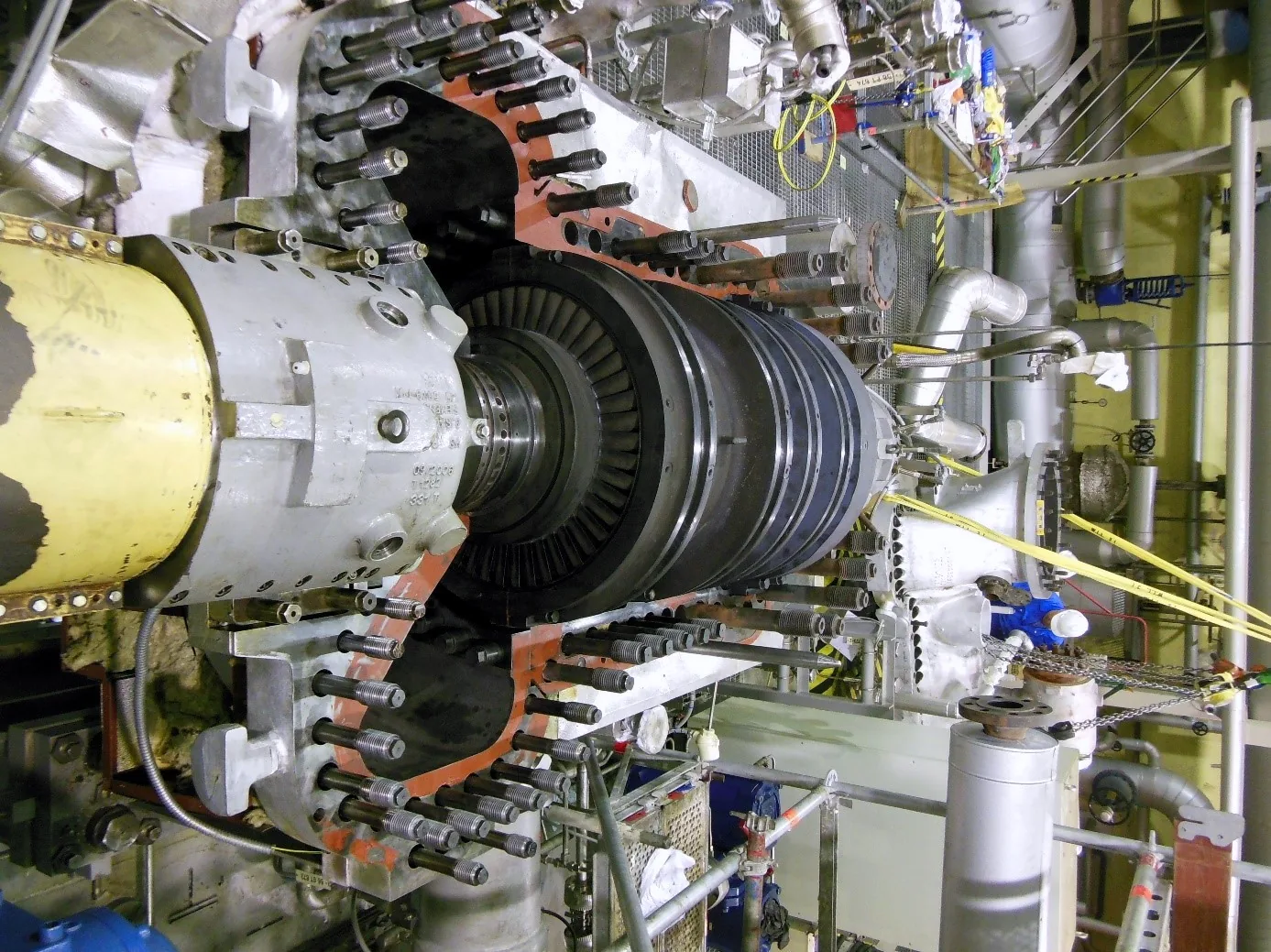
Root Cause Analysis: Guide Vane Failure
Mechanical Damage Due to Steam Expansion
A detailed root cause analysis revealed that the guide vanes, used to regulate steam pressure, were responsible for the vibration issues. As the turbine reached higher loads and the guide vanes opened, vibration levels increased significantly until the system tripped. Further inspection showed:
- Broken bolts and damaged bolt springs
- Mechanical deformation of guide vane components
- Secondary damage across multiple turbine sections
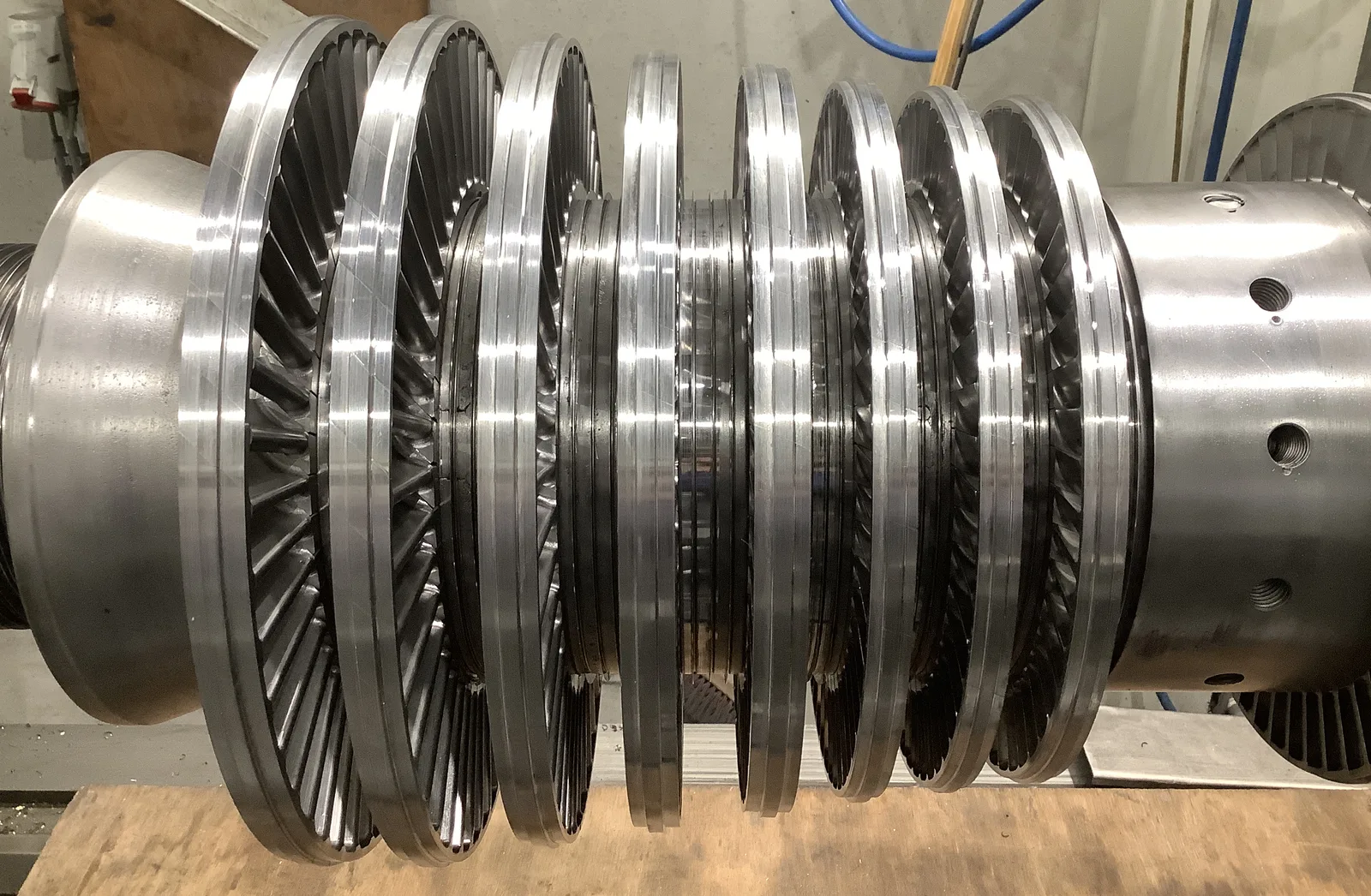
- Rotor damage at first-stage seal strips
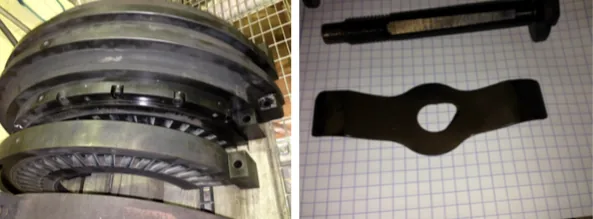 The failure mechanism was linked to sudden steam expansion during start-up or shutdown. This caused excessive force on the guide vanes, leading to bolt failure and progressive damage throughout the turbine.
Such issues are common in steam turbine failure scenarios, where thermal and mechanical stresses combine to impact critical components.
The failure mechanism was linked to sudden steam expansion during start-up or shutdown. This caused excessive force on the guide vanes, leading to bolt failure and progressive damage throughout the turbine.
Such issues are common in steam turbine failure scenarios, where thermal and mechanical stresses combine to impact critical components.
Steam Turbine Repair & Overhaul Strategy
Full Component Restoration and Upgrade
Following diagnosis, Energetic Machinery implemented a complete steam turbine repair and steam turbine overhaul service. Key activities included:
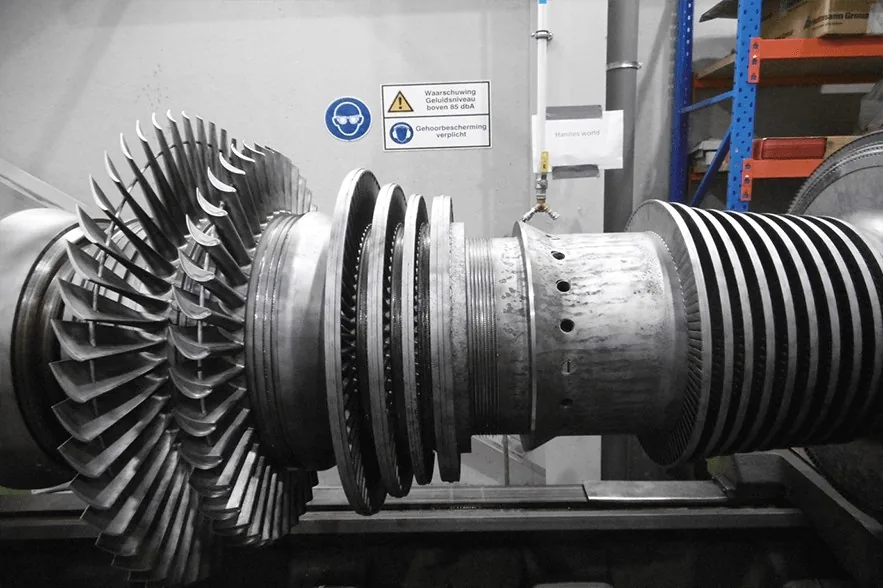
- Disassembly and transport of the rotor to the workshop
- Replacement of damaged seal strips
- Repair of rotor damage and sealing systems
- Restoration of turbine internal components Additionally, damaged bolts and springs were reproduced using reverse engineering spare parts manufacturing. This ensured that all components were replaced with improved versions, optimized for durability and performance. This structured approach ensured a reliable and long-term solution rather than a temporary fix.
Reverse Engineering & Material Optimization
Improving Component Performance with Non-OEM Solutions
Energetic Machinery applied reverse engineering techniques to reproduce critical components, including bolts and springs. Material analysis was also conducted to identify opportunities for improvement. The results:
- New components manufactured with superior mechanical properties
- Improved resistance to thermal and mechanical stress
- Increased reliability under high-load conditions These non-OEM solutions enabled faster turnaround and enhanced performance compared to original components.
Results: Stable Operation at Higher Loads
Eliminating Vibration and Restoring Performance
After completing the overhaul, the turbine was returned to service within approximately three weeks. The results were significant:
- Stable vibration levels across all load ranges
- Elimination of trip events
- Restored full power output
- Extended turbine lifecycle This case demonstrates how expert steam turbine service, combined with advanced diagnostics and engineering, can resolve complex turbomachinery issues.
FAQ: Steam Turbine Troubleshooting & Maintenance
What causes vibration in steam turbines?
Common causes include imbalance, misalignment, damaged components, and issues with guide vanes or sealing systems. Vibration analysis is essential to identify the root cause.
How is steam turbine troubleshooting performed?
Troubleshooting involves turbine inspection, data analysis, vibration monitoring, and root cause analysis to identify and resolve underlying issues.
When does a steam turbine need an overhaul?
A steam turbine overhaul is required when there are recurring failures, increased vibration, efficiency loss, or visible component damage.
Can turbine components be replaced without OEM support?
Yes, reverse engineering spare parts allows obsolete or damaged components to be reproduced as high-quality OEM alternatives.
How can turbine reliability be improved?
Reliability can be improved through preventive steam turbine maintenance, alignment, rotor balancing, and timely repair of critical components.
Conclusion: Expert Turbine Troubleshooting for Reliable Operations
This case study highlights the importance of combining steam turbine troubleshooting, root cause analysis, and reverse engineering to resolve complex failures in industrial rotating equipment. Energetic Machinery's expertise in steam turbine maintenance and repair ensures reliable, cost-effective solutions that restore performance and minimize downtime.